The Risks Nobody Talks About Until It's Too Late
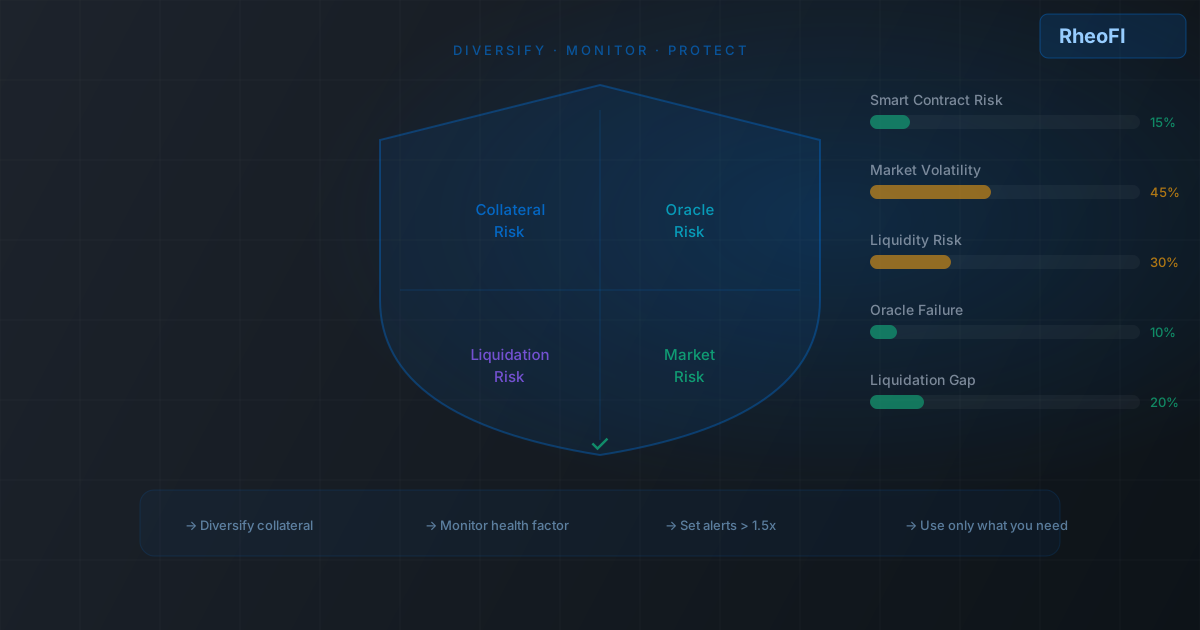
Most DeFi risk guides focus on smart contract bugs. That's one layer. The full stack looks like this:
- Smart contract risk — bugs, logic errors, upgrade key compromise
- Oracle risk — stale or manipulated price feeds triggering incorrect liquidations
- Liquidity risk — high utilization preventing withdrawals when you need them
- Collateral risk — your collateral losing value faster than you can react
- Systemic risk — protocol-wide contagion in shared-pool designs
How RheoFI's Isolation Bounds Risk
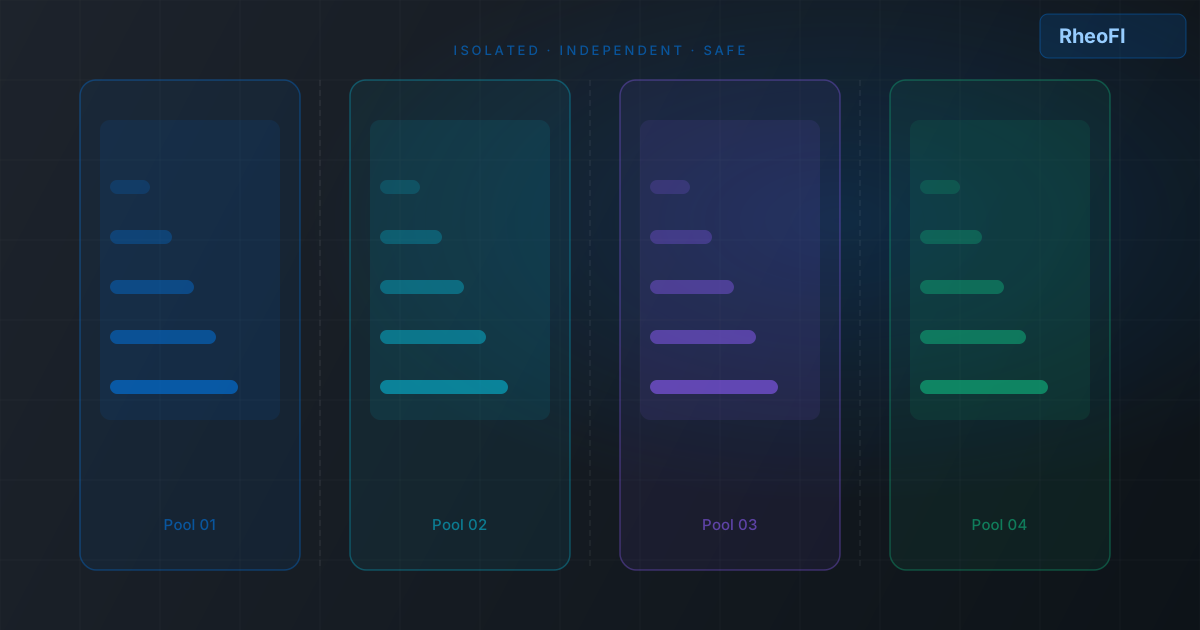
By scoping every market to its own collateral, RheoFI eliminates systemic risk within the protocol. A bad oracle in market A cannot trigger liquidations in market B. You can verify exactly which risk you're taking before you deposit.
Position Sizing Rules
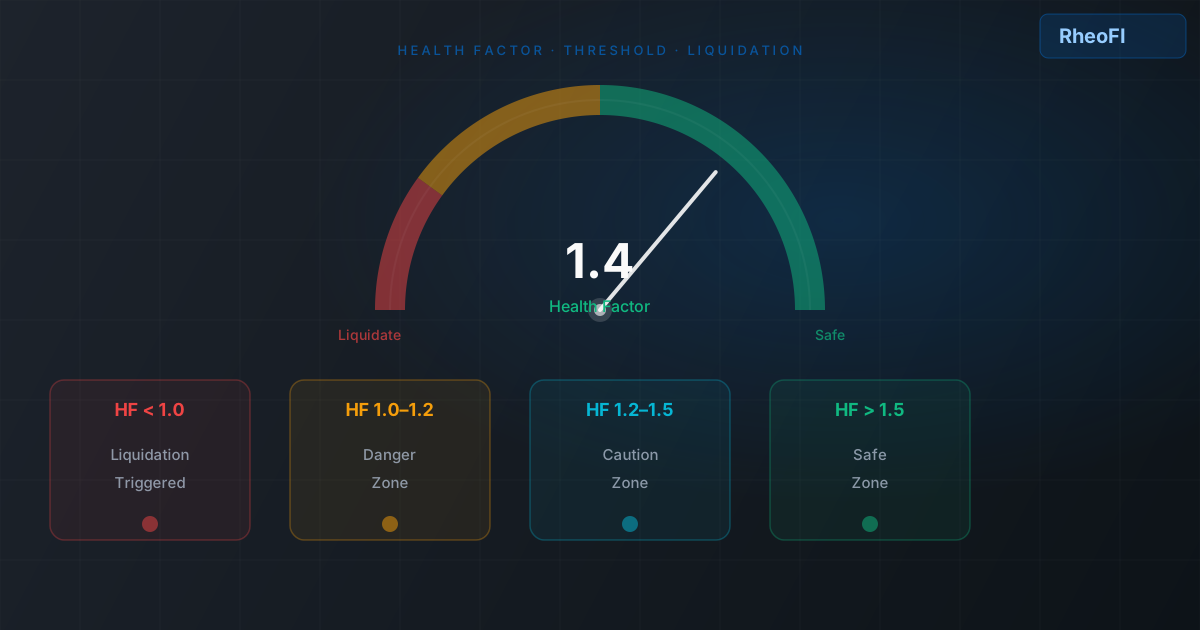
- Never borrow above 50% of max — gives a 50% collateral drop buffer before liquidation
- One market = one risk exposure — don't assume isolation protects you from the collateral you chose
- Set up price alerts — use on-chain tools or centralized monitoring for your collateral price
- Hold emergency reserves — keep liquid assets outside the protocol to repay debt fast in a crash
The Kelly Criterion for DeFi
Never bet what you can't afford to lose entirely. For yield-bearing deposits, a reasonable rule: size your DeFi allocation so a total loss is painful but not catastrophic. Then add the liquidity risk buffer on top.
FAQs
No protocol is risk-free. DeFi risk is bounded and transparent — you can read the contracts. Traditional finance risk is opaque. Both require careful assessment.