Defining Collateral Factor
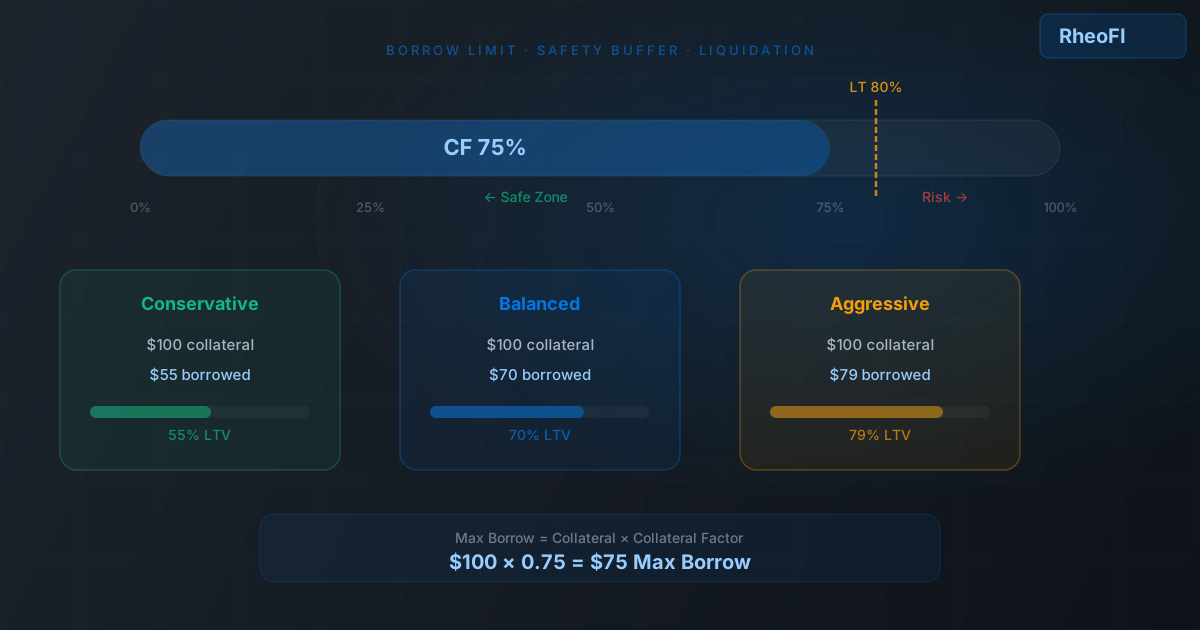
The collateral factor (CF) for a market tells you the maximum you can borrow relative to the value of your deposited collateral. A CF of 75% means: deposit $100 of collateral, borrow up to $75.
Collateral Factor vs Liquidation Threshold
These are two different numbers. The CF is your borrow ceiling — the most the protocol allows you to borrow at deposit. The liquidation threshold is the point at which your position becomes eligible for liquidation, and is always higher than the CF.
| Term | What it is | Example |
|---|---|---|
| Collateral Factor | Max you can borrow | 75% |
| Liquidation Threshold | When you get liquidated | 80% |
| Buffer | Your safety margin | 5% |
Practical Rule of Thumb
Never borrow more than 50–60% of the collateral factor. Volatile assets can drop 20–30% in hours; a conservative buffer keeps your position healthy through normal market swings.
FAQs
It can be updated by governance. Monitor RheoFI announcements if you hold an open borrow position.