The Decision Every DeFi Team Faces
When we designed RheoFI, we evaluated Ethereum, Arbitrum, Base, and Solana before settling on XRPL. The decision came down to four factors: finality speed, fee predictability, native liquidity infrastructure, and regulatory posture.
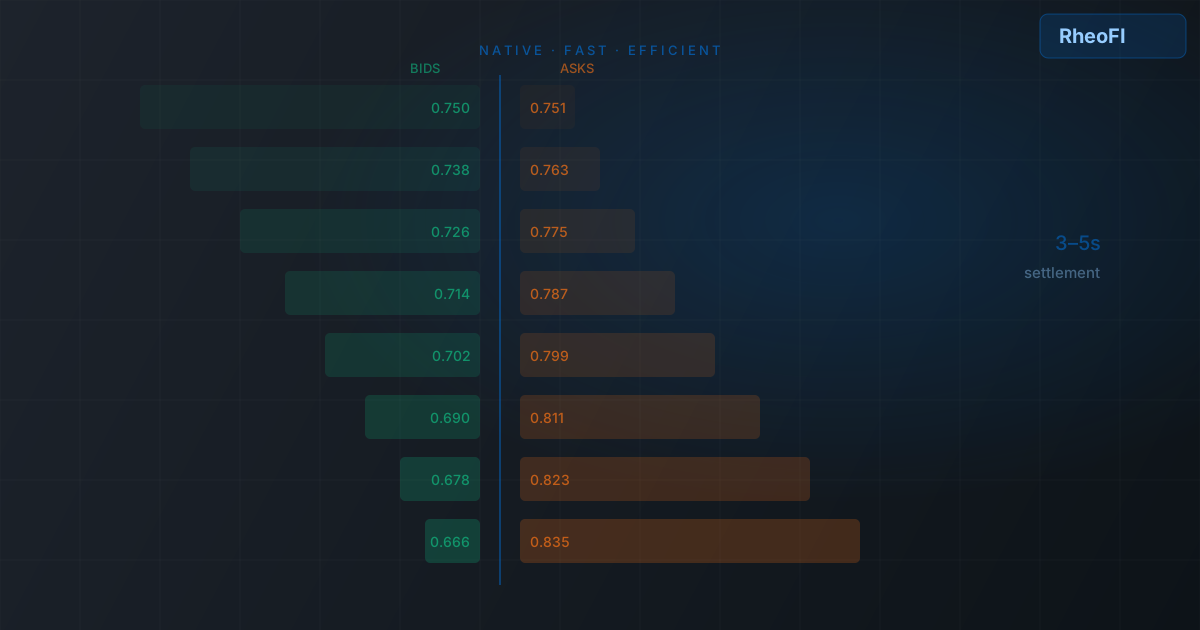
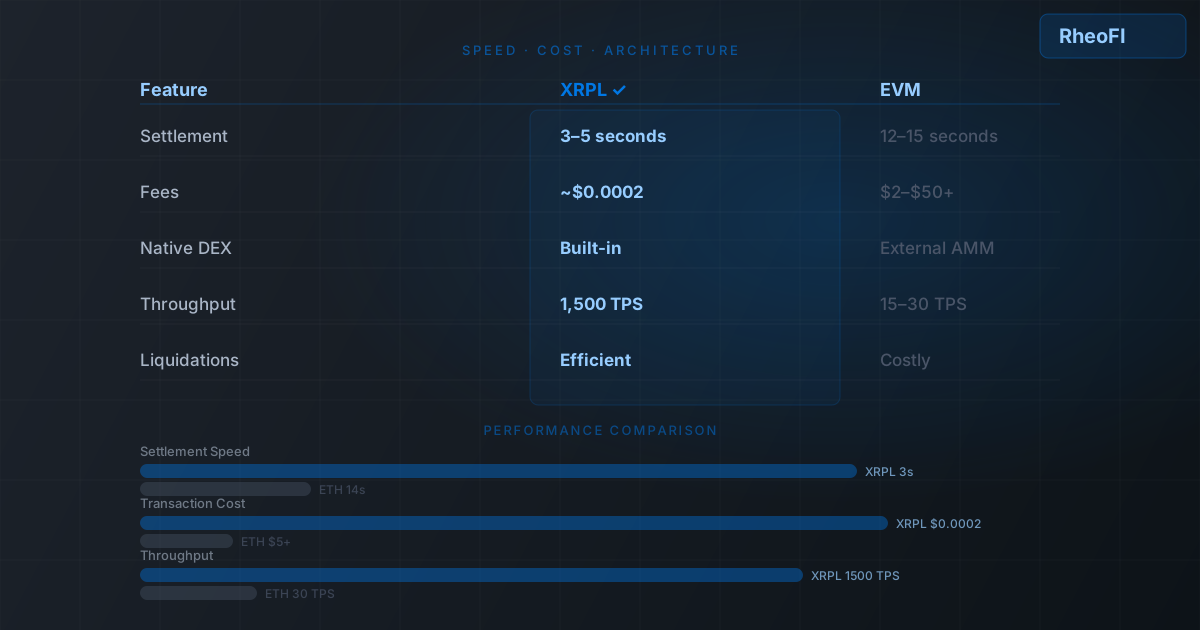
XRPL Finality: 3–5 Seconds, Not 12+
For a lending protocol, liquidation speed is existential. A borrower's position can go underwater in seconds during a flash crash. XRPL's consensus finalizes in 3–5 seconds with no reorg risk — faster and more reliable than any EVM chain we evaluated.
Fees You Can Actually Predict
EVM gas fees spike during congestion — exactly when liquidations are most urgent. XRPL fees are tiny and flat: ~0.00001 XRP per transaction regardless of network load.
Built-In DEX, No External AMM Needed
EVM lending protocols depend on Uniswap or Curve for liquidation swaps, adding counterparty risk and extra hops. XRPL's native order book removes that dependency entirely.
Compliance-Friendly Architecture
XRPL has built-in support for account controls, freeze capabilities, and is overseen by a governance structure that has engaged proactively with regulators. For a protocol operating in DeFi lending, this matters.
References
- XRP Ledger Overview — XRPL
- RheoFI Documentation — Docs